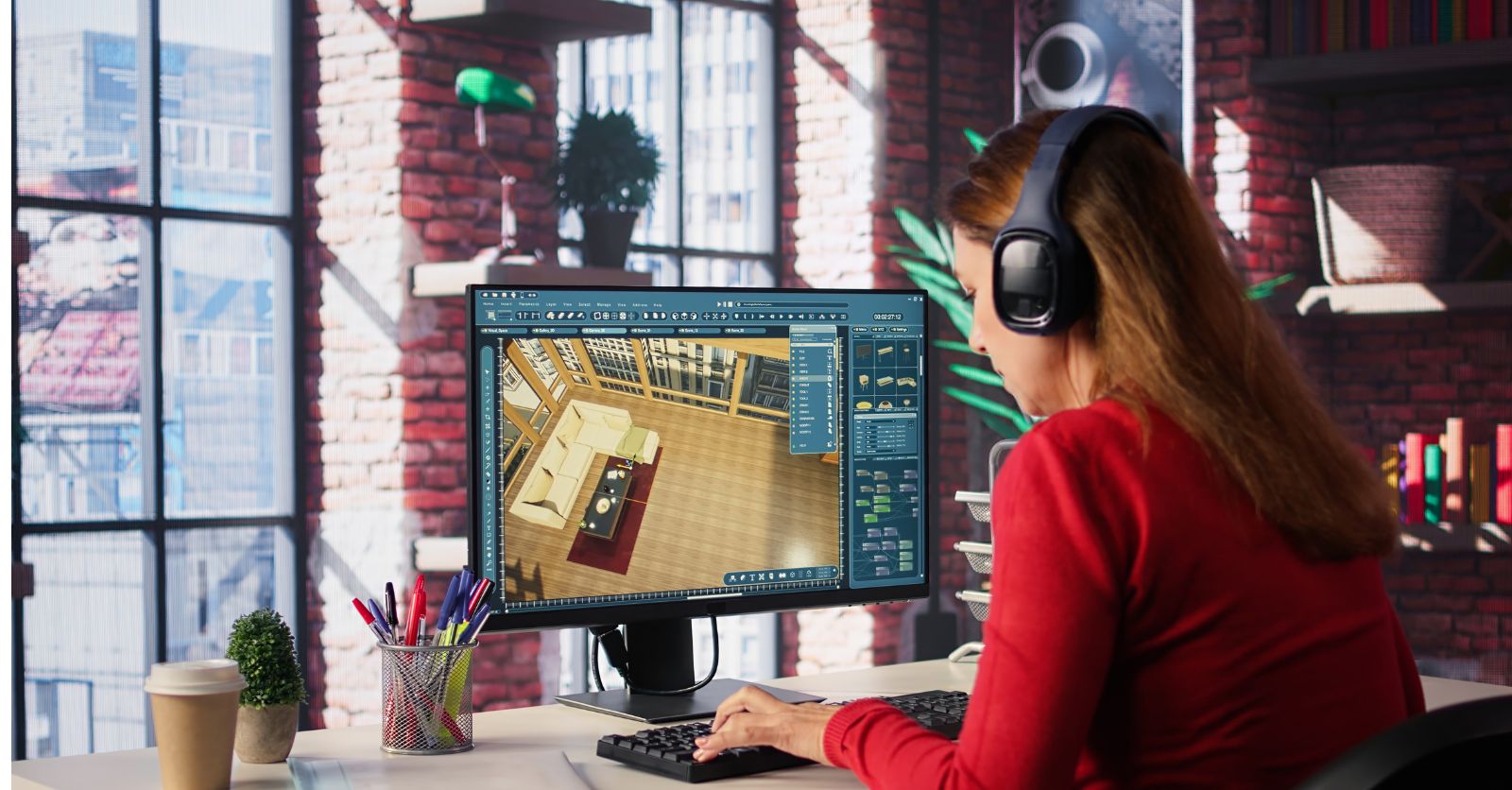
The most common misconception regarding interior design is nothing but the general saying that “one has to have an innate talent in drawing to become an interior designer”
The concern definitely appears fair and logical. But the reality behind it will definitely surprise you.
For several decades the interior design sector has been understood as something closely associated with hand drawn perspective sketches, floor plans, elaborate mood board collag
It's a Myth !
For several decades the interior design sector has been understood as something closely associated with hand drawn perspective sketches, floor plans, elaborate mood board collages etc. The misapprehension is that if one couldn't draw, they cannot sketch designs. This age old notion has held back many spatially gifted, talented individuals from pursuing this field just because they thought that their sketching skills weren’t good enough.
Time has changed and the industry itself has evolved. What was observed as essential for designing is no longer a hindrance for entering into the designing field.
What Actually Matters: Design Aptitude
Aptitude for design is not about how well you can draw a chair or a table - it's all about how well you can think it in a space. The most essential skills for these are spatial reasoning, sensitivity to texture and colour, an eye for proportion and the ability to perceive the lifestyle of the client and the capability to translate it into an aesthetically cohesive, functional space.
These skills can be acquired by training and sharpened with the right audience unlike innate talents. At Blitz Academy, the best professional skill training institute in Kerala, our curriculum for interior design is carefully curated for developing your aptitude as a designer — your ability to observe, analyse, and find solutions creatively — not just your technical hand skills.
Strong aptitude for design indicates that one can walk into a room and instinctively identify what works and what doesn’t and It signifies that one can picture the end result . this is what separates a good designer from a great one — and it has very little to do with being capable of sketching a perfect chair or table.
AI Has Changed The Game
The toolset of the modern interior designers are completely rewritten by Artificial Intelligence, reshaping the skills that any designer must master today driving to the most compelling transformation in the industry.
Platforms in interior design that are AI powered can now:
-
Generate photorealistic 3D renders from simple text descriptions
Develop in-depth floor plan layouts on the basis of room dimensions and style preferences
-
Suggest furniture arrangements, colour palettes, and lighting schemes within seconds
-
Automate repetitive drafting tasks enabling the designers to focus on creativity and client relationships
This growth of AI integrated interior design indicates that the barrier of "I can't draw" has lowered than it has ever been. A designer who precisely understands a space, its proportion, and what the client needs — and who is skilled to utilize AI tools effectively — can deliver exceptional results even without traditional drafting skills.
Blitz Academy has effectively integrated AI tools into the interior design programme enabling students to learn how to work with the technology that actually shapes the industry today. A clear knowledge on how to prompt, guide, and refine AI outputs is becoming a core professional skill, and through our interior design courses we make sure our students are ahead of the curve.
Is Drawing Completely Irrelevant?
We cannot keep a blind eye towards this question. Drawing is not completely irrelevant in this field. Knowing basic freehand sketching is always a useful communication tool, especially in th early- stage of client conversations where using a notepad or a quick concept sketch can be useful for conveying an idea faster than a software rendering. Roughing out a layout or elevation by hand can help build more credibility and design confidence.
However, a professional-level artistic drawing is not a prerequisite to become an interior designer. Ultimately, what is essential is your ability to see design, understand scale and proportion, and communicate ideas with clarity— no matter that's through a sketch, a 3D render, a mood board, or an AI-generated visual. The interior design courses offered by Blitz Academy builds these communication skills from the ground up, regardless of your starting point.
Who Is Interior Design For?
The short and easiest answer: it's meant for everyone who is passionate about how spaces make people feel.
It's not mandatory to have an art degree. What you need is curiosity, an interest in people and their environments, a readiness to master both the creative and technical stances of the profession, and the thirst to transform that interest into a genuine career.
Interior design is one of the few industries where creative vision, logical thinking, technical knowledge, and human empathy all come together.
Your Next Step
If you have a curiosity to learn, a passion for spaces, and a fascination in knowing how environments affect people — you already have everything you need to begin.
Blitz Academy's Interior Design Course covers from fundamentals to advanced levels including design principles, colour theory, space planning,client communication, materials and finishes, AI-assisted design tools, and professional practice — developed to work for beginners and working professionals alike.